
About VitaComm Education
Opening the SPIRIT Learning Activities Toolbox – First Look : Making the Abstract Tangible

Opening the SPIRIT Learning Activities Toolbox – First Look : Making the Abstract Tangible
Imagine walking into a classroom.
A bowl of water sits quietly on the table.
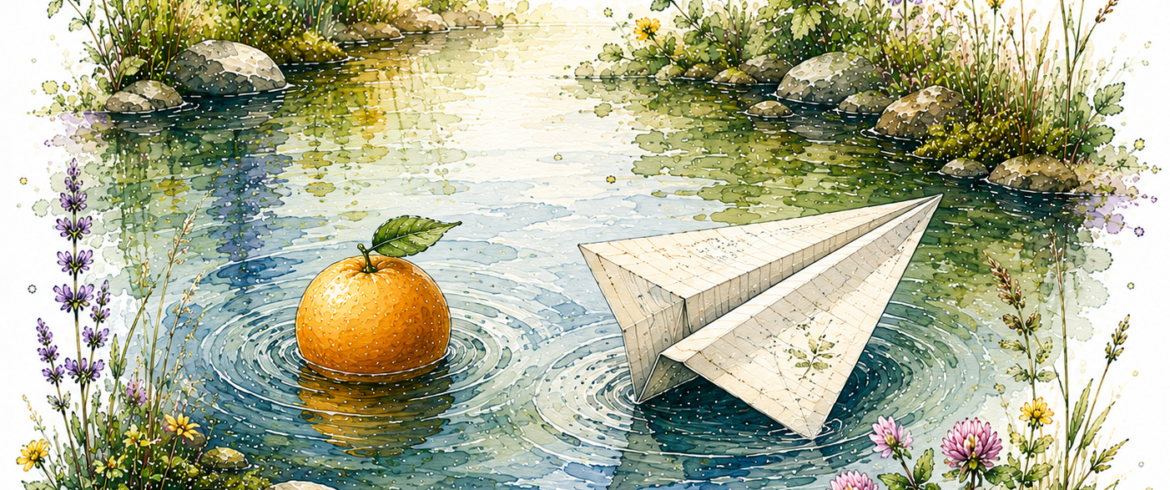
Without saying a word, the teacher places a clementine into the water.
It floats.
The children smile.
Then the teacher peels the very same clementine and gently places it back into the bowl.
This time, it sinks.
Suddenly the room fills with questions.
“Why did that happen?”
“What’s different?”
“How can the same fruit behave so differently?”
The lesson has already begun.
One of the things I appreciate about the SPIRIT Learning Activities Toolbox is that it doesn’t simply provide teachers with activities. It offers ways of thinking about learning. One example is the Energiser–Object Lesson—a teaching technique that has been used in many educational contexts for years, including children’s catechism, where ordinary objects are used to help children experience ideas that might otherwise remain abstract.
The object is never the lesson.
It is the bridge.
In one well-known catechism lesson, the floating clementine becomes an introduction to the Apostle Paul’s image of the Armour of God (Ephesians 6:10–18). Before exploring the 6 individual pieces of armour—the Belt of Truth, the Shield of Faith or the Helmet of Salvation—the children first explore a much simpler question:
Why do we need armour at all?
The bowl of water becomes a picture of the challenges, difficulties and temptations we all encounter throughout life. Notice that the water never changes. The challenges remain.
What changes is the clementine.
Its peel becomes a simple symbol of the armour. When the peel remains on, the fruit stays afloat, rising above the water despite being surrounded by it. Once the peel is removed, it sinks beneath the surface.
Whether or not a teacher chooses this particular example, the educational thinking behind it is powerful. Children are no longer trying to understand an abstract idea through words alone. They have experienced it. They have seen it. They now have a mental picture they can return to throughout the lesson.
And that is exactly what happens.
As the class explores each piece of the armour, the clementine quietly remains part of the learning journey. It becomes a shared point of reference, helping children connect each new idea back to the central purpose of the lesson. The object itself never taught the concept. The teacher’s intentional design did.
The same way of thinking can be applied far beyond faith education.
Imagine a paper air-plane.
It might begin as a lesson on aerodynamics, measurement and the engineering design process. Children build, test, observe and improve their designs. But with thoughtful planning, the teacher can weave another idea through the experience. Instead of asking only, “How far did it fly?”, the class begins asking, “Where was it trying to go?”
Without changing the activity itself, the lesson gradually becomes a conversation about purpose, direction, perseverance and making intentional choices. The paper airplane is no longer simply a model. It becomes a meaningful symbol that connects the beginning of the lesson to its conclusion.
Perhaps that is the real strength of this technique.
It reminds us that children rarely remember every explanation we give them. They remember the experiences that helped those explanations make sense.
As teachers, we are surrounded by ordinary objects every day. A piece of fruit. A paper air-plane. A stone from the playground. A glass of water.
Perhaps the question is not, “What can I teach today?”
Perhaps it is,
“What could this become?”
