About VitaComm Education
Opening the STEAM Toolbox First Look: From Waste to Wonder – Making Recycled Paper with Purpose

Opening the STEAM Toolbox First Look: From Waste to Wonder – Making Recycled Paper with Purpose
The excitement of the Kinder Egg experiment you read in the previous article has just settled.
Children are still talking about the surprising reaction they witnessed.
One question remains on the board:
“Can small things create big changes?”
This time, instead of baking soda and water, the investigation begins with something much simpler.
A handful of old paper.
Paper that would normally be thrown away.
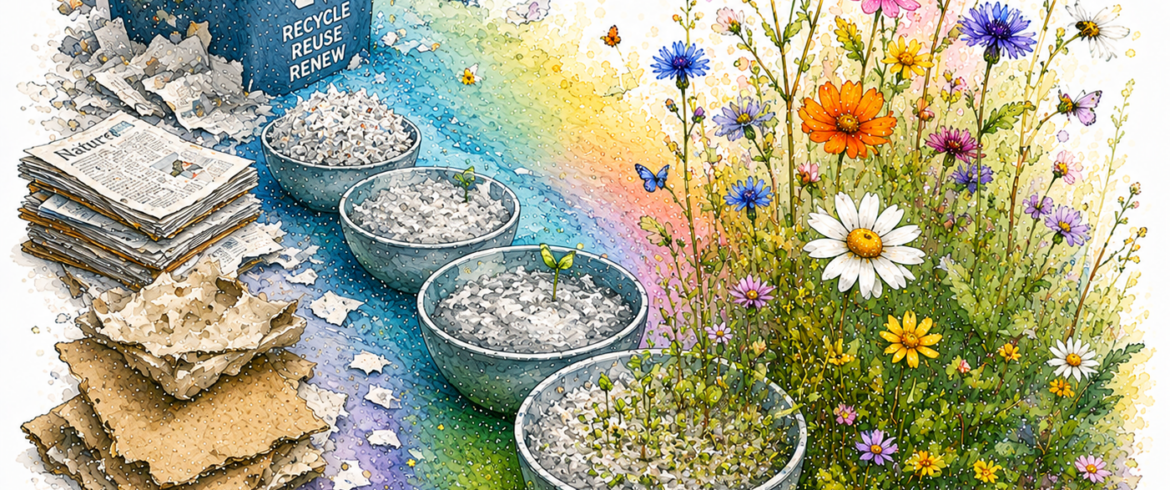
As children tear it into pieces, soak it, blend it into pulp and carefully press it into new sheets, they begin to discover something remarkable.
Waste can become something beautiful.
At first glance, this looks like a lesson about recycling—and it certainly is. Children investigate how paper fibres can be reused, explore the paper-making process and discover how recycling helps reduce waste and care for the environment. Environmental science, engineering, design and literacy naturally come together through one meaningful challenge: creating a handmade recycled paper card.
But the lesson reaches beyond sustainability.
Before making their cards, children pause to think about the person who will receive them. They choose words carefully, reflecting on how they want someone else to feel when they read the message. As they revise their writing, they discover that words, like actions, have an impact.
The recycled paper becomes more than the final product.
It becomes a symbol.
Just as discarded paper can be transformed into something valuable, ordinary moments of kindness, gratitude and encouragement can transform someone’s day.
This is where the teacher’s questions become especially important.
Questions such as “What do you want your card to say, and what do you want it to feel like?”, “How did making paper change the way you think about waste?”, or “What caring action could you take next?” help children connect the scientific process with their own choices and relationships.
Throughout the activity, another transformation quietly takes place.
Older students support younger ones, ideas are shared, problems are solved together and everyone contributes to creating something meaningful. Scientific investigation becomes an opportunity to build connectedness as well as knowledge.
Perhaps that is the most memorable lesson this activity offers.
Recycling is not only about giving materials a second life.
It is about recognising that small, thoughtful choices—whether with paper, with words or with one another—have the power to create something far more valuable than we might imagine.
Sometimes the most meaningful transformations begin with something people thought had no value left.
