
About VitaComm Education
Opening the Games Toolbox – First Look: Treasure Hunt — Learning to Notice What Matters
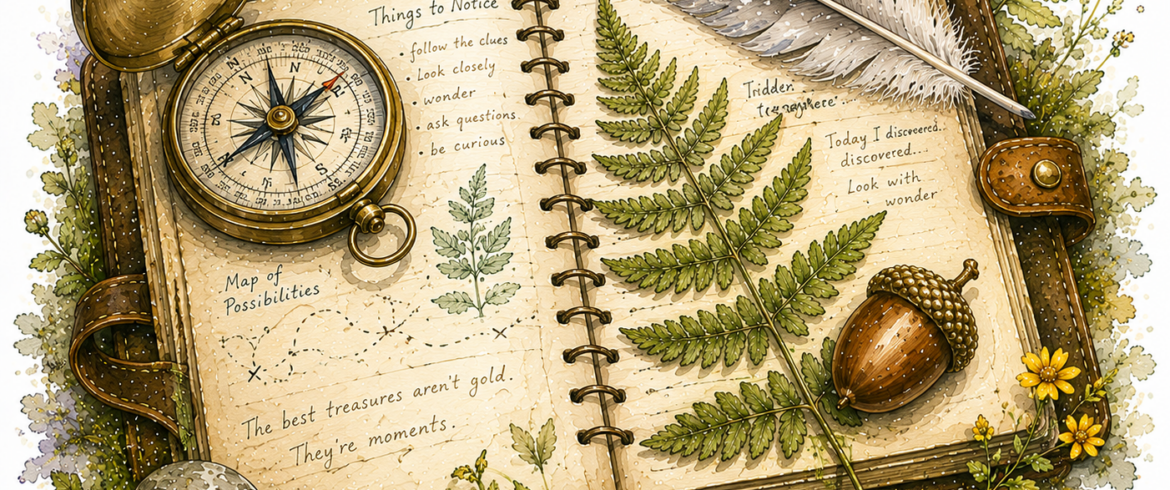

Opening the Games Toolbox – First Look: Treasure Hunt — Learning to Notice What Matters
A team of children races across the playground, excited to find the next clue.
Suddenly, they stop.
One child points towards a tree.
Another notices something moving beneath a leaf.
A third quietly says,
“I’ve never seen that before.”
For a moment, the treasure hunt pauses.
Curiosity takes over.
That is where the real learning begins.
Treasure hunts have been enjoyed by children for generations, but with thoughtful design they can become much more than a search for hidden clues. They can become an opportunity to slow down, observe more carefully and discover that the world around us is full of things we often overlook.
In this version of the game, children work in teams to follow a series of clues leading them to different stations around the school or outdoor environment. At each station they solve a short challenge related to both people and nature, collecting a puzzle piece before moving on. Once every piece has been found, teams assemble their puzzle to reveal the location of the final treasure.
The treasure itself is intentionally connected to nature—a packet of seeds, a small plant, a “Nature Protector” certificate or another meaningful reward that reinforces the purpose of the journey.
While the game feels like an adventure, it naturally develops the skill of Valuing People and Nature.
Children begin noticing biodiversity by looking closely at plants, insects, trees and other living things they may normally walk past. They discover that nature is not simply the background to our lives, but a living system of which we are part.
At the same time, they learn that caring for nature and caring for people often go hand in hand. Teams only succeed when they listen to one another, share ideas, divide responsibilities and make decisions together. Solving the clues requires curiosity, problem-solving and openness to different perspectives.
As teachers, we can deepen these moments by asking simple questions along the way:
- What did you notice here that you hadn’t seen before?
- How can we leave this place exactly as we found it?
- Did everyone have a chance to share their idea?
- What helped your team solve this clue together?
These brief conversations help children recognise that the treasure hunt is not only about reaching the final destination. It is also about learning to observe more carefully, appreciate the living world around them and value the people exploring it alongside them.
Perhaps that is the greatest lesson a treasure hunt can offer.
Sometimes the greatest treasure isn’t something we find at the end.
It’s learning to notice what has been around us all along.
